2026-10-24 ·
Spring Pollen and Its Impact on Bridgewater HVAC Systems
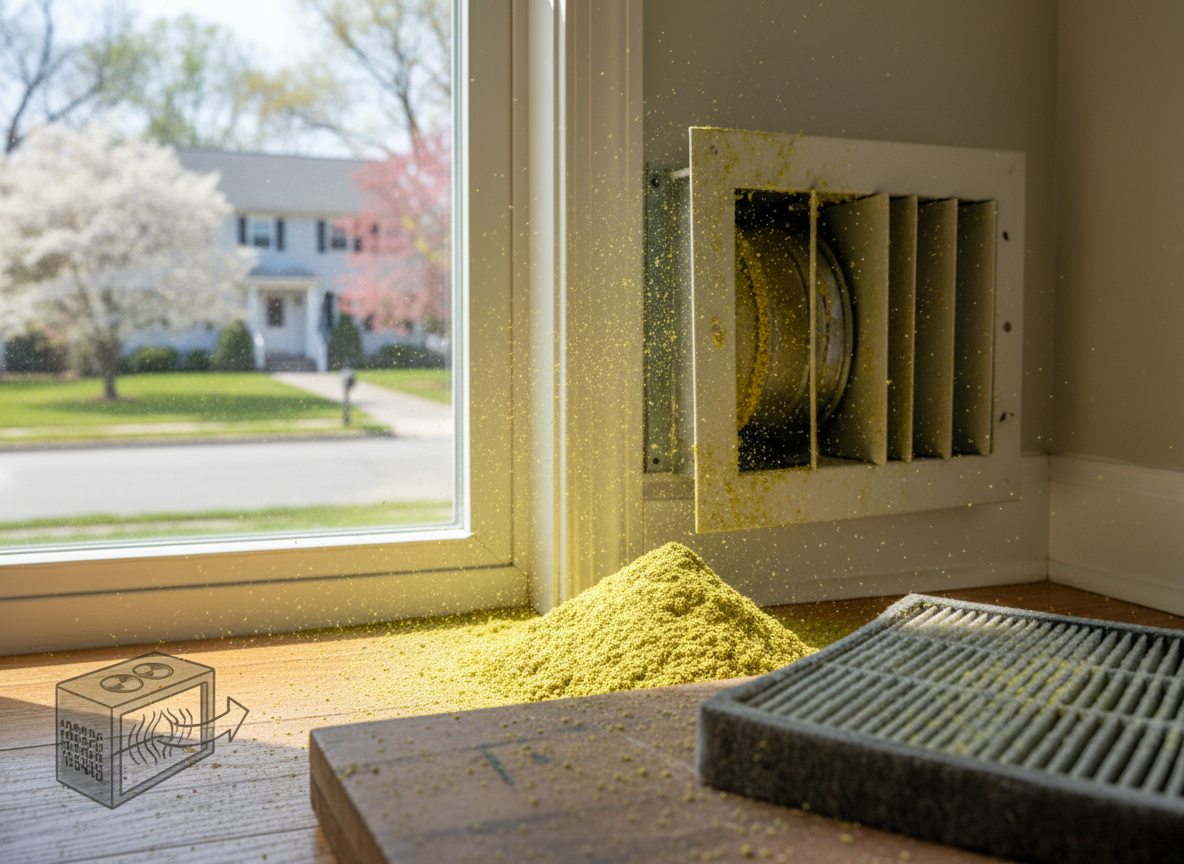
Spring pollen in Bridgewater can raise indoor allergen levels noticeably as it infiltrates HVAC systems through intake vents and open windows during the March-to-May bloom period. Homes in Finderne and Martinsville often see reduced airflow and higher dust accumulation because the area's four distinct seasons bring moderate precipitation that keeps pollen airborne longer before rain washes it down. This leads to more frequent filter changes and occasional coil buildup that homeowners notice as weaker cooling or heating performance.
How Pollen Travels Through Local HVAC Ducts
Bridgewater sits in Somerset County where spring winds carry pollen from surrounding fields and Duke Farms into residential neighborhoods like Finderne and Martinsville. Intake vents on rooftops or side yards pull these particles straight into the ductwork of single-story ranches and two-story colonials common throughout the area. Once inside, pollen sticks to the interior walls of metal ducts, especially in systems installed 15 to 25 years ago that have accumulated a thin layer of prior dust. Moderate spring rains help some pollen settle outdoors but also create humidity that makes the particles adhere more firmly to coil surfaces. Residents near Bridgewater Commons report noticing a fine yellow film on return vents by mid-April, which signals the start of reduced system efficiency. HVAC duct cleaning becomes relevant when airflow drops and homeowners begin adjusting thermostats more often to maintain comfort.
Impact on System Efficiency and Filter Life
Pollen accumulation shortens filter life from the usual 60-90 days down to 30-45 days in Bridgewater homes during peak season. The fine particles bypass standard fiberglass filters and settle on evaporator coils, creating an insulating layer that forces the blower motor to work harder. In older neighborhoods such as Martinsville, where many homes still use original duct layouts from the 1970s and 1980s, this extra resistance can raise energy use noticeably. Moderate precipitation keeps outdoor pollen counts elevated between rain events, so the HVAC system continues drawing in new material even after homeowners close windows. Over time the restricted airflow leads to uneven temperatures between upstairs and downstairs rooms, a common complaint in two-story homes near Raritan. Regular inspection of the blower compartment reveals the yellow residue that confirms pollen as the main contributor rather than general household dust.
Air Quality Concerns for Allergy-Sensitive Households
Bridgewater residents with seasonal allergies often experience worsened symptoms when HVAC systems recirculate pollen-laden air through living spaces. The four-season climate means spring pollen loads arrive while winter heating has already dried out duct interiors, making it easier for particles to become airborne again. Neighborhoods like Finderne, with many split-level homes built on sloped lots, tend to have longer duct runs that trap more material before it reaches the living areas. This recirculation can keep allergen levels elevated even on days when outdoor counts are moderate. Air duct cleaning for allergies addresses the source by removing the embedded pollen rather than relying solely on upgraded filters. Homeowners near Somerville report clearer breathing after targeted cleaning of both supply and return runs that serve bedrooms.
Maintaining Ducts in Older Bridgewater Homes
Many homes in Martinsville and Green Knoll feature duct systems that predate modern filtration standards, making them more susceptible to pollen infiltration during spring. These older layouts often include flexible duct sections that sag slightly over time and create low spots where particles collect. The moderate precipitation pattern of Somerset County keeps outdoor pollen moist enough to clump but not heavy enough to fall out of the air before entering vents. Homeowners can check for reduced airflow by feeling supply registers on the second floor after running the system for 20 minutes. When pollen buildup combines with prior winter dust, the result is a thicker layer that standard vacuum attachments cannot reach. Maintaining air ducts in older Bridgewater neighborhoods outlines inspection points specific to these housing styles without requiring full system replacement.
Practical Timing for Spring Duct Attention
Bridgewater homeowners benefit from scheduling duct attention after the heaviest pollen drop in late May but before summer humidity sets in. This window allows removal of spring accumulation before it mixes with moisture that could support mold growth later. Systems serving homes near Duke Farms see higher pollen loads because of proximity to open green spaces that release large quantities of tree and grass pollen. Checking the condensate drain and coil condition after cleaning prevents secondary moisture issues that can appear once temperatures rise. Checking for moisture issues in air ducts after summer humidity provides follow-up guidance for the next season. Consistent attention to these seasonal cycles keeps HVAC performance steady year after year in the local climate.